
What do Orange County's climate and soils mean for concrete?
Orange County's Mediterranean climate lets us pour concrete year-round. The risk here is not cold but dry heat, low humidity and the Santa Ana winds of fall and winter.
Hot-weather concreting means any mix of high air temperature, hot concrete, low humidity, wind and direct sun. A Santa Ana day checks most of those boxes at once.
- Precautions Are Needed Once Evaporation Passes
- About 0.20 lb/sq ft/hr
- Without Them, Plastic-Shrinkage Cracking Is Likely Above
- 0.25 lb/sq ft/hr
On those days we dampen the subgrade, forms and rebar before the truck arrives. We set windbreaks or sunscreens where we can, use evaporation retardants or fog misting during finishing, and keep the slab moist-cured for 3 to 7 days.
Coastal Sands Versus Inland Clays
Soils change as you move inland.
- Near the coast. From San Clemente through Newport Beach and Huntington Beach, marine-terrace sands drain well and expand very little.
- Inland. Toward Santa Ana, Anaheim, Irvine and the foothill cities, moderately expansive clays are more common, with worse pockets on former river deltas and lake beds.
The California Building Code calls soil expansive when, among other tests, its plasticity index is 15 or higher and its expansion index exceeds 20. Clay like that swells when wet and shrinks when dry, which lifts and cracks unreinforced slabs.
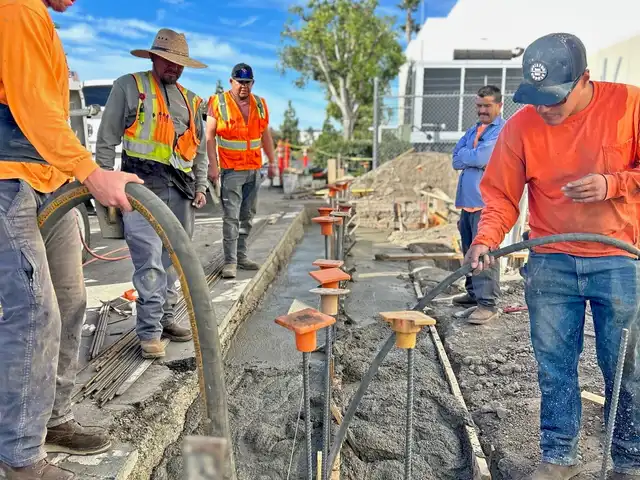
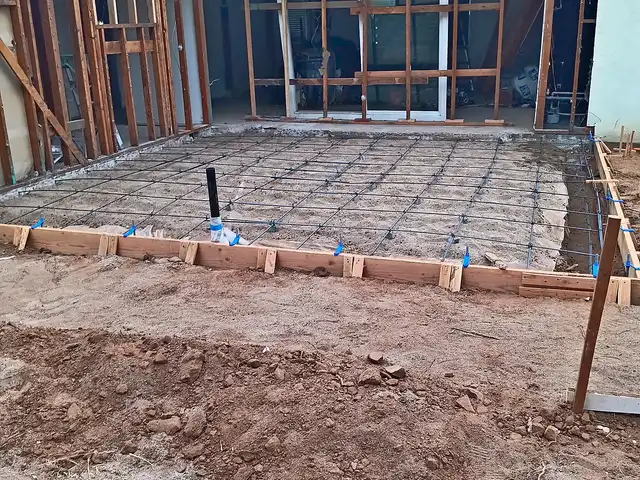
Our answer is a compacted base and rebar at 18 inches on center each way. We cut control joints at 10 feet or less on a 4-inch slab and grade so water runs away from the concrete.
Seismic Reinforcement Is Not Optional
The Newport-Inglewood and Whittier-Elsinore faults put most of Orange County in Seismic Design Category D under the California Residential Code. We build to the engineered plans and the local building division's inspection schedule.
- Footing And Stem Wall Steel
- No. 4 bars at code spacing
- Concrete Cover Against Earth
- At least 3 in
Which concrete projects do we do most in Orange County?
Orange County's housing stock is mostly post-war tract and master-planned construction, and the driveways, patios and sidewalks of that era are wearing out. Replacement is a large share of our work here.
- Median Build Year
- 1977
- Homes Built Before 1980
- About 57%
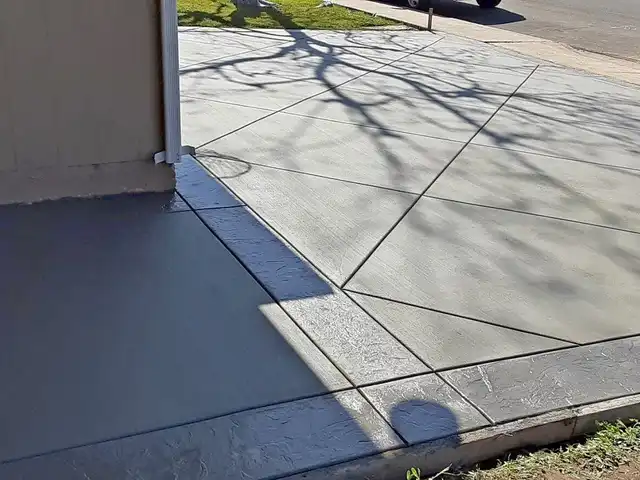
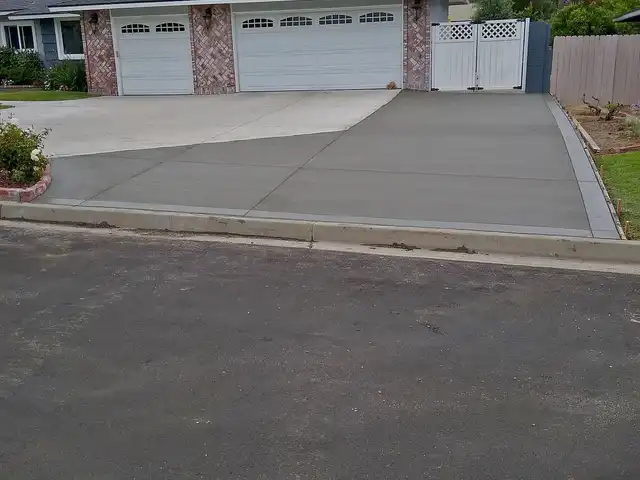
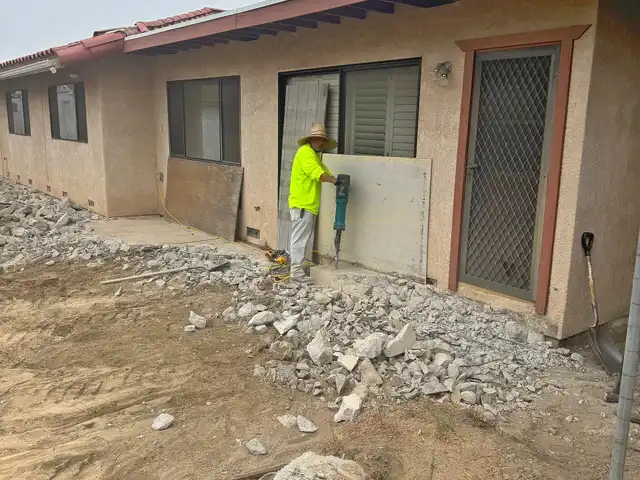
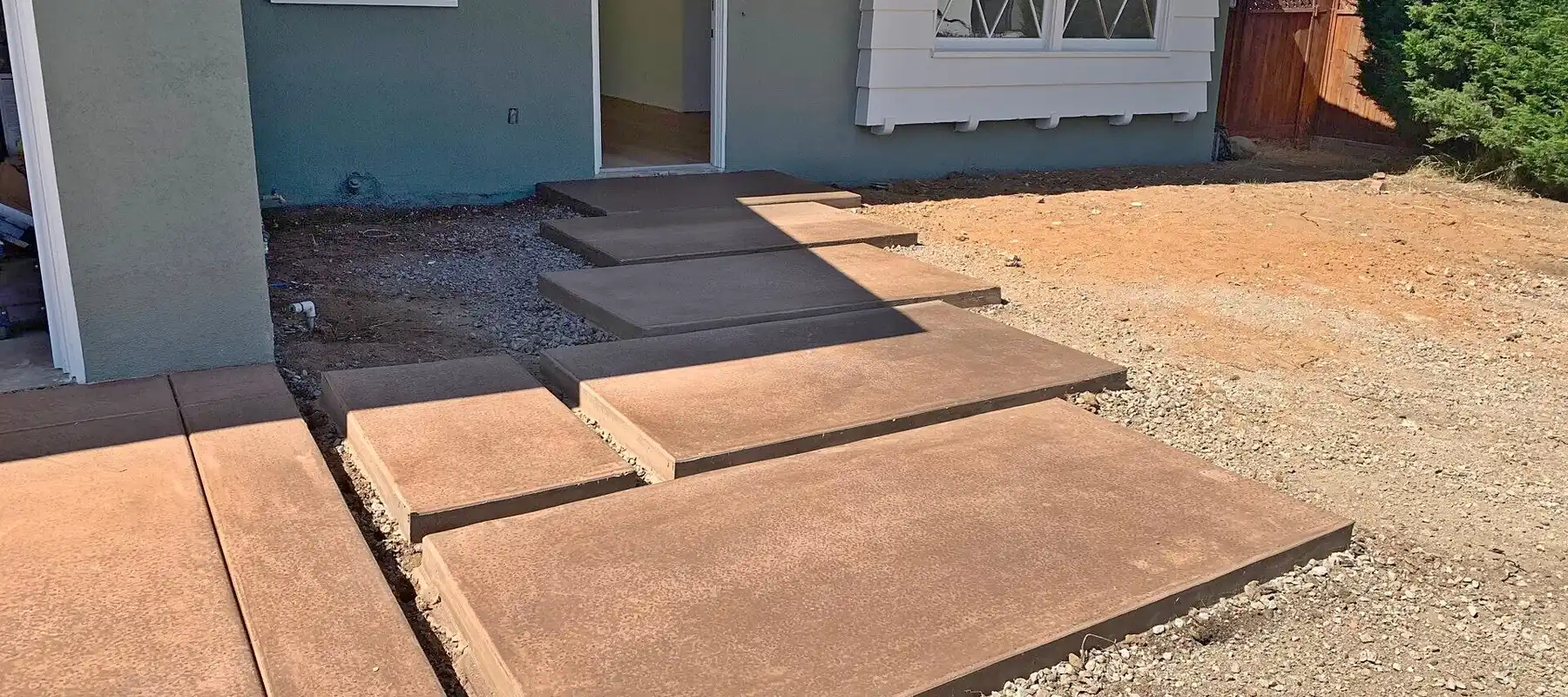
- Driveway and walkway replacement: tear out the heaved original, recompact the base and pour a new 4-inch reinforced slab.
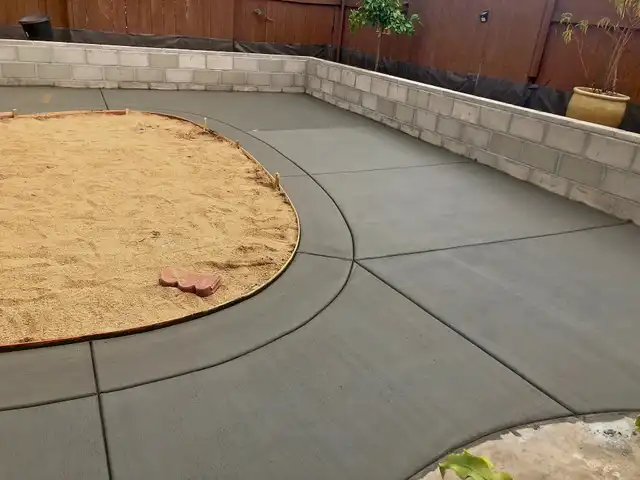
- Patios, sidewalks, curbs and approaches: backyard flatwork plus city-standard sidewalk, curb and gutter work in the right-of-way.
- Repair and replacement: an honest read on whether a settled or spalling slab can be repaired or should be replaced.
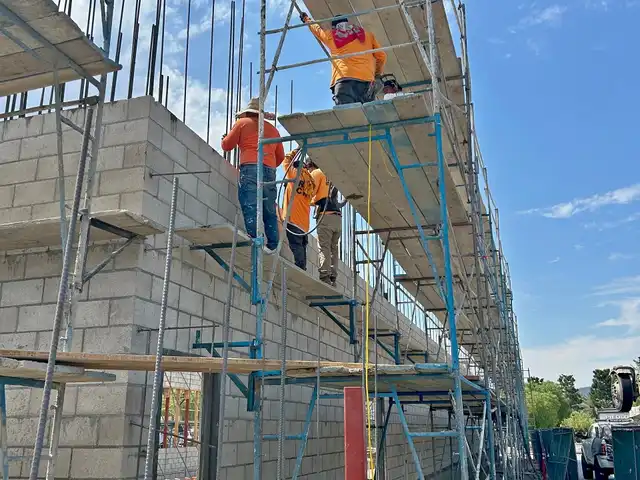
- Foundations and slabs: footings, stem walls and slab-on-grade for ADUs, garage conversions, additions and new builds.
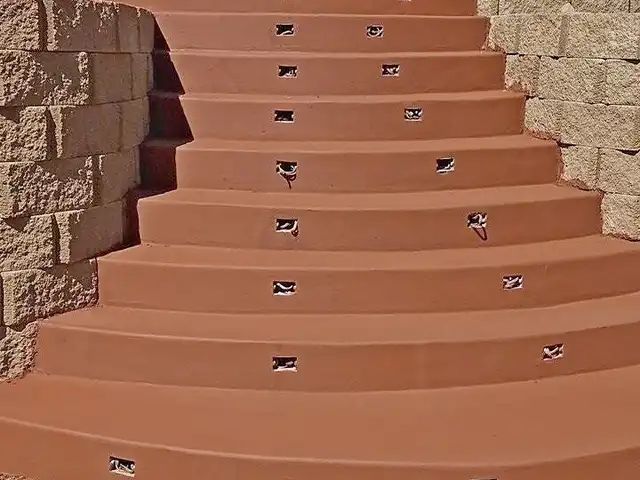
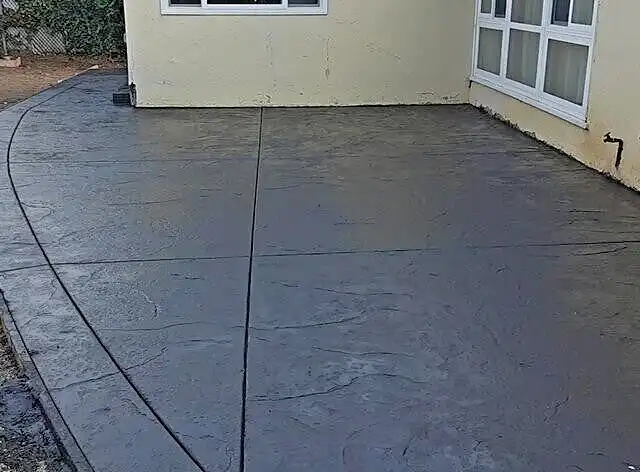
- Decorative and specialty finishes: stamped, integrally colored and exposed-aggregate concrete for coastal and hillside homes.
- Subcontract concrete for GCs: flatwork and foundation packages for builders and property managers on tight schedules.
Do you need a permit for concrete work in Orange County?
Usually not for the slab itself, but often for the street side of the job. Which permit applies comes down to where the concrete sits.
- At grade on your own property. The California Residential Code lists sidewalks and driveways among work exempt from a building permit. Cities can amend that list, so we confirm with the local building division before we quote.
- In the public right-of-way. A driveway approach, curb cut, gutter or public sidewalk needs an encroachment permit. In unincorporated Orange County that comes from OC Public Works, OC Development Services, which lists driveway and sidewalk improvements first among its encroachment examples; applications go through myOCeServices.ocgov.com. Each of the county's 34 incorporated cities issues its own.
- Anything structural. Foundations, structural slabs and retaining walls over 4 feet need a building permit and inspections.
We tell you up front which permit applies to your job and what it takes to get it.
Rule of thumb: if the concrete touches the street, sidewalk or curb, plan on an encroachment permit. If it stays on your property at grade, it is usually exempt, but we verify every time.
What does concrete cost in Orange County?
We quote every job from a site visit, but published Southern California ranges are a fair starting point. These are third-party figures, not our prices.
| Work | Published Range | Source, Region, Year |
|---|---|---|
| Reinforced Concrete Patio | $7–$13 per sq ft (stamped $10–$18) | HomeBlue, Orange County, 2022 |
| Broom-Finish Driveway | $8–$12 per sq ft | Level Works, Los Angeles, 2026 |
| Standard Driveway | $10–$18 per sq ft | Sal & Bros, San Diego, 2025 |
| Driveway Removal And Replacement | $15–$18 per sq ft | Level Works, Los Angeles, 2026 |
| Demolition, 4-inch slab | $2–$4 per sq ft ($4–$6+ reinforced) | CNS Demo, Southern California, 2026 |
Thickness, rebar, finishes, access and haul-away all move the number. Compare with our San Diego County and Los Angeles County pages, then call for an itemized estimate.
How far do we travel, and how do we schedule Orange County jobs?
Raaw Concrete Inc. is based at 2033 S Freeman St in Oceanside, California, at the north end of San Diego County.
- South County, up I-5. San Clemente, Dana Point and San Juan Capistrano are a straight run past Camp Pendleton, and our closest out-of-county market.
- The coast. Laguna Beach and Newport Beach properties often have tight access, where our concrete pumping background pays off.
- Master-planned communities. In Laguna Niguel, Aliso Viejo, Mission Viejo and Lake Forest, check HOA guidelines before choosing a finish.
Our crews start at 5 a.m., Monday through Saturday, to beat freeway traffic and place concrete before the afternoon heat. Most residential projects take about 3 working days from demolition to final pour, depending on the job.
Call (714) 321-0105 or send the form and we will reply within one business day to schedule a site visit. Estimates are free and itemized.