When should concrete be repaired, and when should it be replaced?
Concrete rarely fails on its own; it fails because the base, soil or drainage under it moved. If the ground is stable and the damage is shallow, a repair will hold. If the ground is still moving, any repair is temporary.
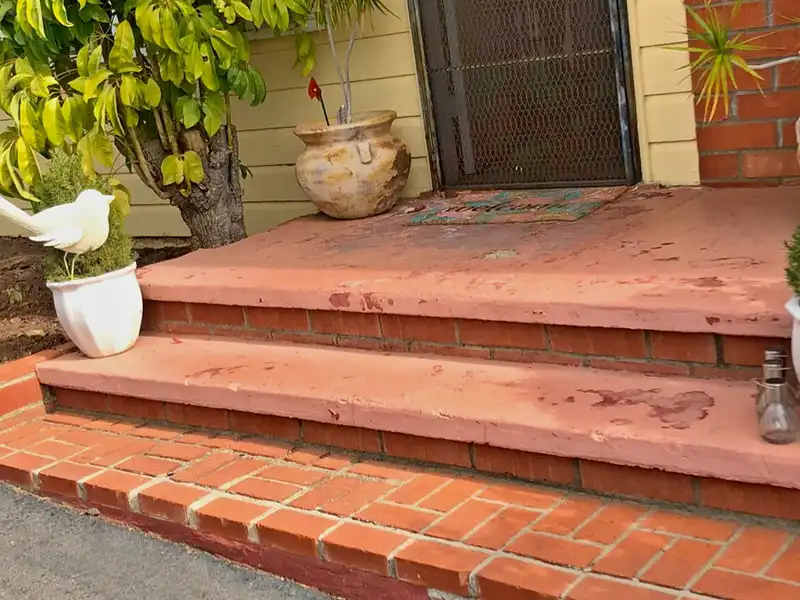
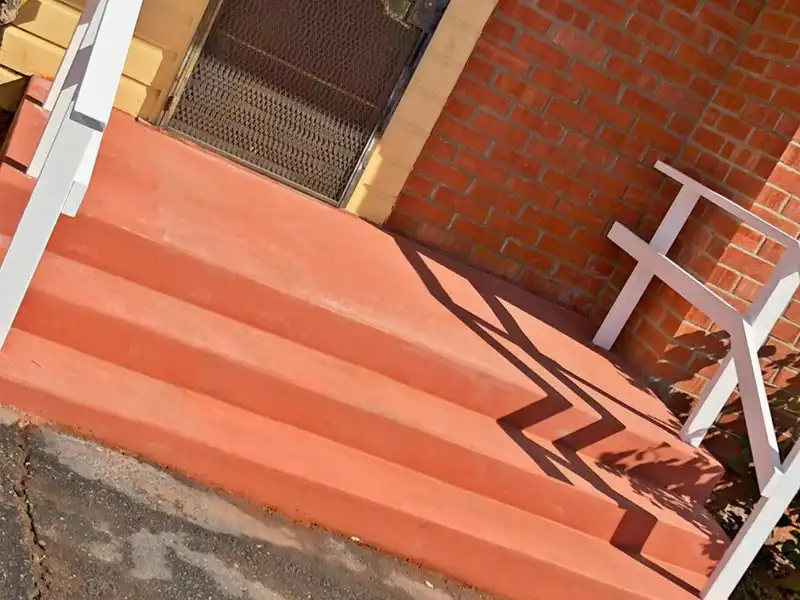
- Repair: hairline shrinkage cracks, small spalled patches, a chipped step edge, or one panel that settled slightly on stable soil.
- Sectional replacement: two or three panels that cracked through, heaved or dropped, while the rest of the slab is flat and sound.
- Full replacement: cracks through most panels, widespread scaling, a slab poured too thin or without joints, or a base that has washed out.
Lifting a sunken slab can work when it is uncracked and the soil under it is stable, but where clay, roots or washout caused the drop we replace the panel instead.
Raaw Concrete Inc. is a licensed, bonded and insured C-8 concrete contractor in Oceanside, California, serving homeowners, property managers and general contractors across San Diego, Orange, Riverside and Los Angeles counties. We price repair and replacement side by side so you can compare.
What is the difference between shrinkage cracks and structural cracks?
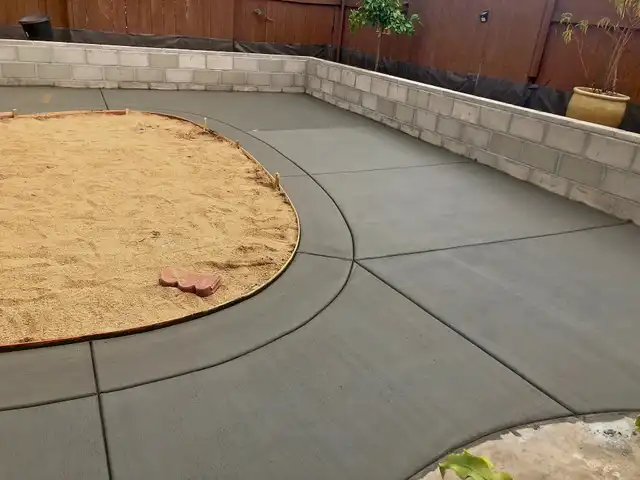
Concrete shrinks as it cures, so every slab wants to crack somewhere. Control joints tell it where, and a slab with joints too far apart cracks between them instead. We lay ours out to NRMCA CIP 6.
- Joints On A 4-Inch Slab
- About 10 ft apart
- Furthest We Will Space Them
- 12 ft
- Depth Of The Cut
- 1/4 of the slab minimum
Shrinkage Cracks
These are narrow, fairly straight and level from side to side. Heat, low humidity and wind pull moisture out of fresh concrete fast, and hot-weather precautions start once evaporation passes about 0.20 pounds per square foot per hour.
Shrinkage cracks are mostly cosmetic and can usually be sealed rather than torn out.
Structural and Settlement Cracks
These run through the full slab, often at an angle, with one side higher than the other. Wide cracks that keep growing, rocking panels, or a step in the surface all point to the base, and that means replacement.
What causes slabs to settle, heave or lift in Southern California?
Expansive clay soil. Much of inland Los Angeles County, the San Fernando Valley and parts of Orange County sit on clay that swells when wet and shrinks when dry.
The USDA classes these shrink-swell clays as Vertisols. The California Building Code treats an expansion index above 20 as expansive, and slabs on that ground rise with the winter rains and drop through the dry season until they crack.
Drainage. Water triggers clay movement and washes out bases. A downspout dumping beside a slab undoes every other precaution, so we set the grade to shed water.
- Slope Away From The House
- 1/4 in per ft (2%) for 10 ft
- Expansive Soil, 5 ft Out From Footings
- 2% minimum
Tree roots. Roots grow toward the moisture under a slab, then lift it. Cutting the root and repouring is the usual fix. Street trees usually belong to the city, so we check its rules first.
Fixing any of these starts with site preparation and base work, where the durability of a replacement is decided.
Why do concrete patches and overlays so often fail?
Patching is cheap up front. It fails for predictable reasons:
- A thin patch has little to bond into. Traffic and heat cycles pop it loose.
- Overlays follow the slab. If the panel underneath is still moving, the crack telegraphs through the new surface.
- Nothing about the cause changed. The clay, roots or runoff that broke the slab are still there.
Resurfacing can refresh a sound slab with surface scaling. It will not fix a slab that has cracked through or settled.
- Resurfacing A Sound Slab
- About $3–$10 / sq ft
How does sectional replacement work, and will the new concrete match?
Sectional replacement removes only the failed panels and pours new ones that tie into the old slab. It is usually the best value when most of a driveway or patio is still sound.
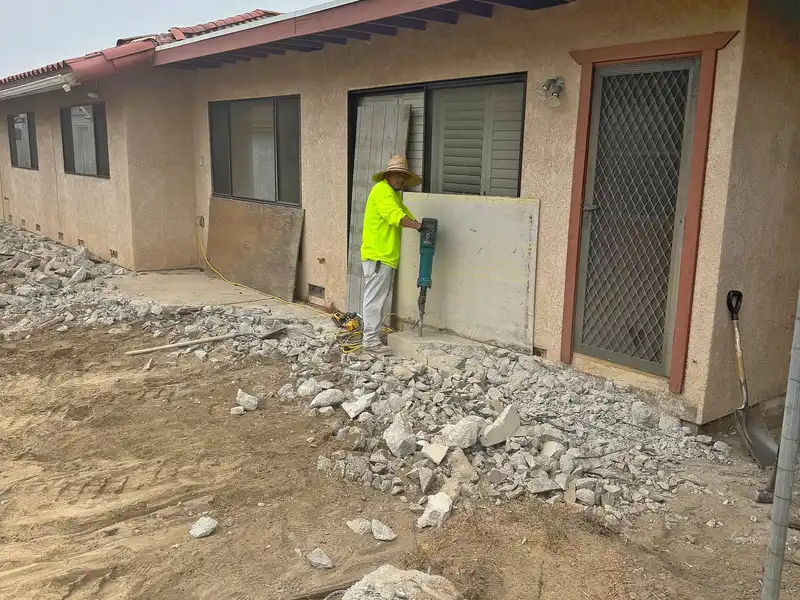
- We saw-cut on existing joint lines so the seam looks intentional, then break out and haul away the panel (see our concrete demolition and removal service).
- We dig out the failed base, compact new base and correct the grade so water runs away from the house.
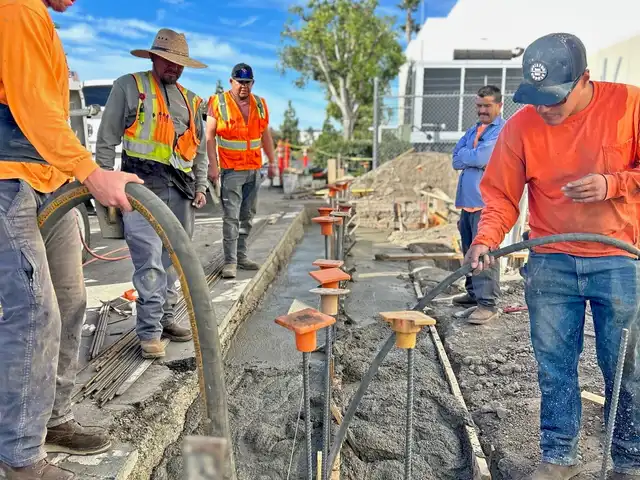
- We drill and epoxy dowels into the old slab edges to tie the new panel to the old slab and resist differential settlement.
- We pour to the neighboring panels' thickness: 4 inches minimum on residential driveways and 5 to 6 inches where trucks park, with rebar at 18 inches on center each way.
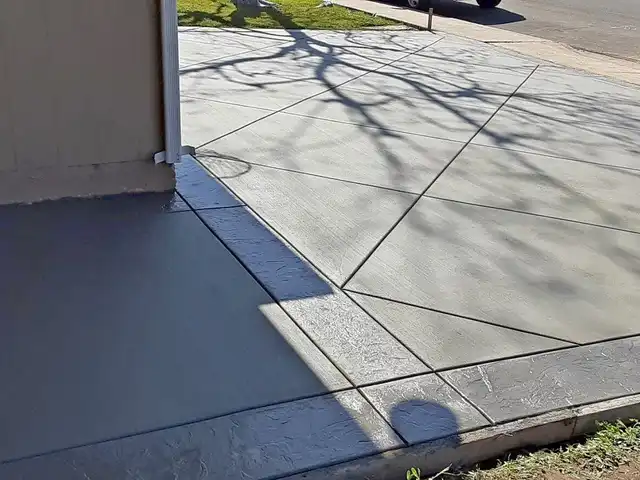
- We match the finish: broom texture, border bands, joint spacing and, if you want it, integral color from our decorative concrete options.
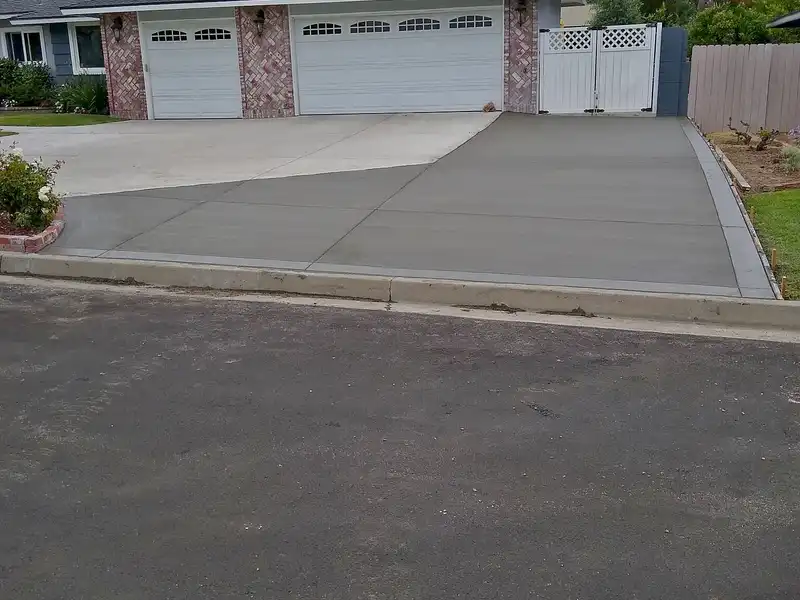
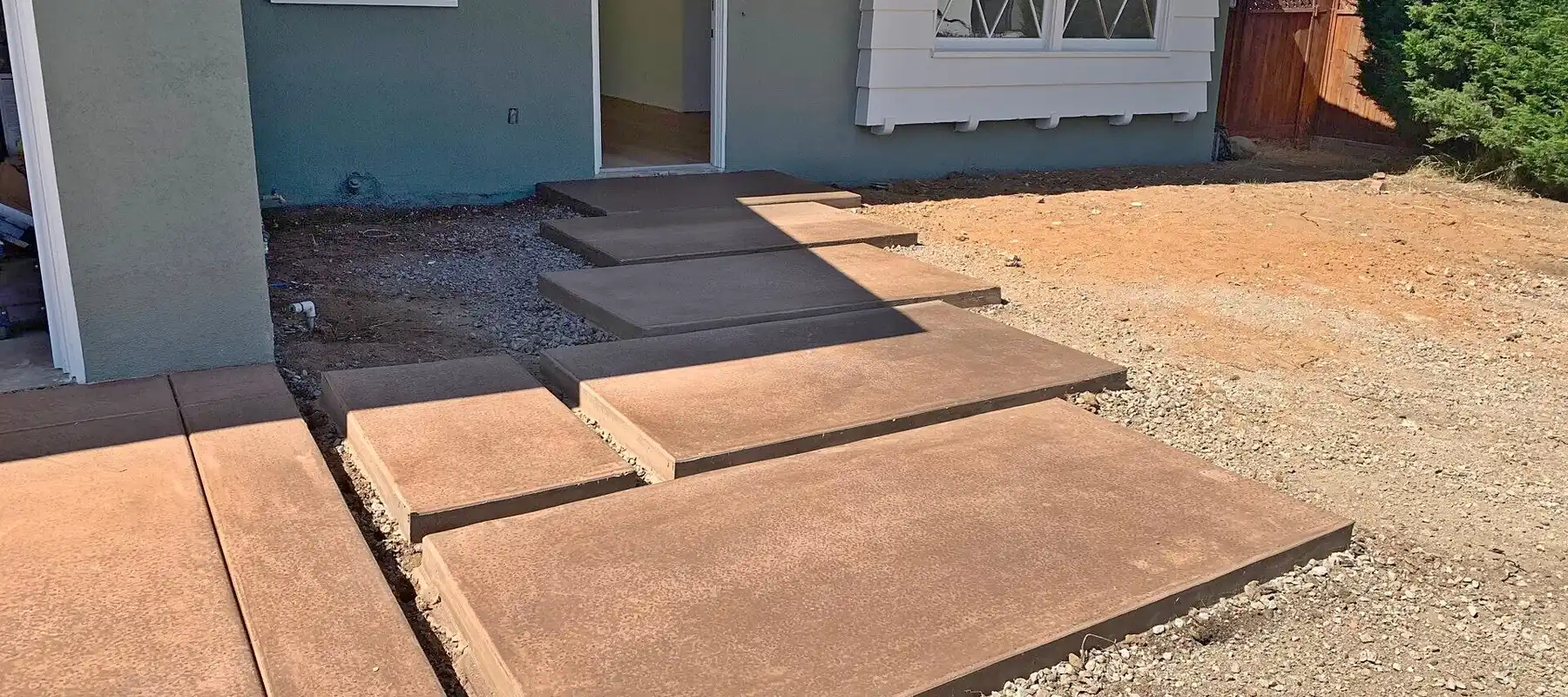
One caveat: new concrete reads darker than old at first and lightens as it dries out, as the driveway extension in the gallery shows.
Are sunken or lifted sidewalks a liability for property owners?
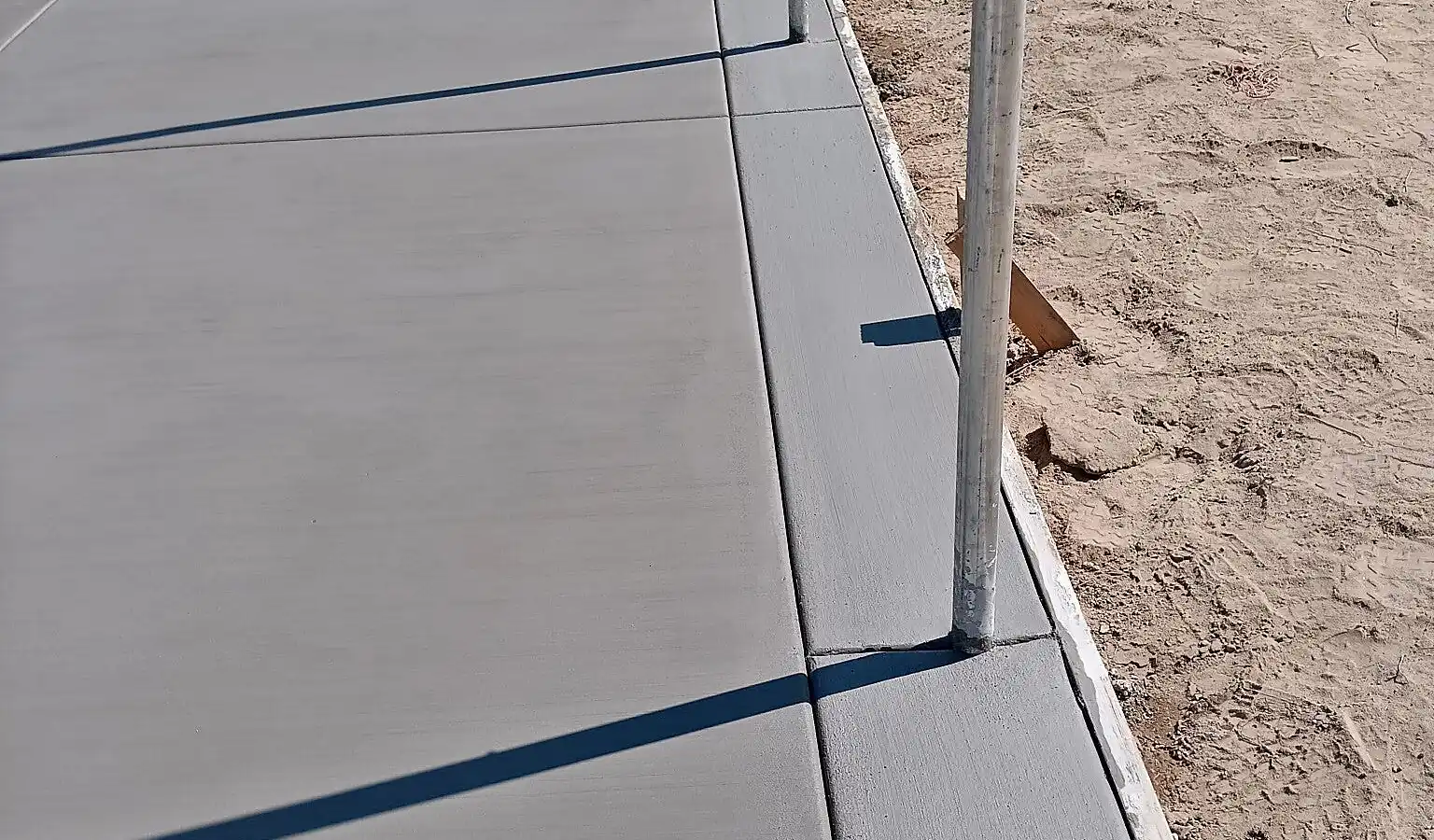
They can be. A raised sidewalk edge is a trip hazard: the ADA Standards require any change in level over 1/2 inch to be ramped rather than left as a step.
Who must fix a public sidewalk varies by city, so ask your public works department before someone is hurt.
The California Residential Code (R105.2) exempts private sidewalks and driveways from a building permit, though cities can amend that list. Work in the public right-of-way needs its own permit:
- City of Los Angeles: an A-Permit from the Bureau of Engineering covers repair or reconstruction of curbs, sidewalks, driveway approaches and gutters (LAMC 62.105).
- Unincorporated LA County: a Road Construction Permit through EPIC-LA, which requires a contractor license number and insurance.
- City of San Diego: a Right-of-Way Permit; curb, gutter and sidewalk replacement up to 150 linear feet qualifies for over-the-counter Rapid Review under Information Bulletin 165.
- Oceanside, Orange County and Riverside County: Oceanside requires a permit for driveway work in the public right-of-way; Orange County and Riverside County issue encroachment permits for driveway and sidewalk improvements. Riverside County says most permits issue within 14 working days.
We handle these permits as part of our sidewalk, curb and flatwork work and tell you at the estimate what your city requires.
What does concrete removal and replacement cost in Southern California?
Quotes depend on thickness, reinforcement, access and haul distance, so treat these as published 2025–2026 ranges, not our price list. We give a written, itemized estimate after a site visit.
| Item | Published Range | Region And Source |
|---|---|---|
| Break-Out And Haul-Away, 4-In Slab | $2–$4 per sq ft | Southern California, CNS Demo, June 2026 |
| Break-Out, 6-In Or Reinforced Slab | $4–$6+ per sq ft | Southern California, CNS Demo, June 2026 |
| Sidewalk Removal | $4–$6 per sq ft | San Diego, Demo Diego, 2026 |
| Minimum Charge, Jobs Under 100 sq ft | $500–$1,000 | San Diego, Demo Diego, 2026 |
| Driveway Tear-Out And Replacement | $15–$25 per sq ft | San Diego, Sal & Bros, December 2025 |
| Standard Removal And Replacement | $15–$18 per sq ft | Los Angeles, Level Works, 2026 |
| New Walkway Concrete, Installed | $10–$20 per sq ft | San Diego, Sal & Bros, October 2025 |
| Break-out premium, 6-inch over 4-inch slab | 20 to 40 percent more | San Diego, Demo Diego, 2026 |
Reinforced or thick slabs cost more to break out. Small jobs carry a minimum, so replacing a whole driveway or walkway at once is often cheaper per square foot than three separate repairs.
What happens on a repair or replacement job with Raaw Concrete Inc.?
- Site visit. We read the crack pattern, check for rocking panels, trace where water goes and note trees and utilities.
- Permits and scheduling. Right-of-way work gets its permit filed before we schedule the crew.
- Break-out and base. Old concrete comes out, the base is rebuilt and compacted, and the grade is corrected.
- Forms, reinforcement, pour. Dowels into the old slab, a rebar grid, then the pour and a finish to match.
- Joints and curing. We cut the joints the same day the slab is finished, then cure it while it gains strength.
- Joints Cut After Finishing
- 4 to 12 hours
- Keep Foot Traffic Off
- 24 to 48 hours
- Keep Vehicles Off
- 14 days
- Full Cure
- 28 days
- Most Residential Jobs Take
- About 3 working days, depending on the job
Browse our recent work or request a free estimate, and we will tell you plainly whether you need a repair or a replacement.