
What do Riverside County's climate and soils mean for concrete?
Riverside County is the hottest of the four counties we serve. Summer highs regularly pass 90 to 100°F in the Temecula–Murrieta corridor and the Coachella Valley.
Hot weather means any mix of high temperature, low humidity, wind and sun that speeds moisture loss and hydration. Hot-weather practice starts at 80°F and above with low humidity.
Heat raises water demand, shortens working time and weakens the finished slab.
- 28-Day Strength, Same Mix At 90°F Rather Than 73°F
- 5–10% lower
- Evaporation Rate That Calls For Precautions
- 0.20 lb/sq ft/hr
- Rate Where Shrinkage Cracking Is Likely
- Above 0.25 lb/sq ft/hr
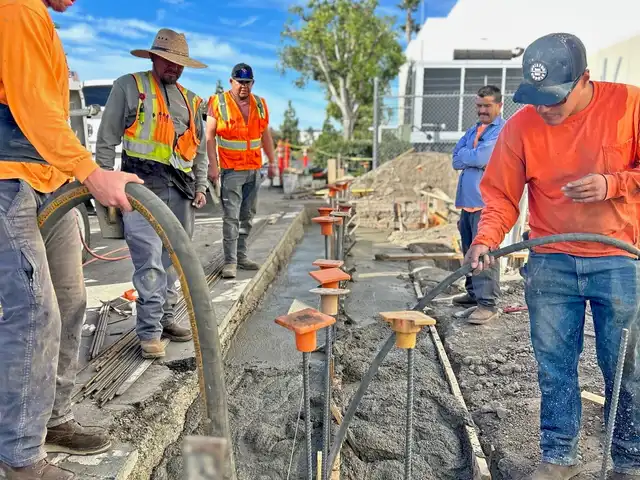
Our answer is simple: pour early and cure long. Crews start at 5 a.m., so most Inland Empire slabs are placed before the heat builds. We dampen the subgrade, forms and rebar on hot, dry days and use set retarders when needed.
New concrete stays wet-cured for 3 to 7 days, per NRMCA CIP 11.
A full 7 days of moist curing makes it about 50% stronger than concrete left to dry.
Expansive Clay in Temecula, Murrieta and Menifee
Clay-rich soils in southwest Riverside County swell when wet and shrink when dry. The California Building Code classifies soil as expansive when, among other criteria, its plasticity index is 15 or more and its expansion index exceeds 20.
Footings in these areas need to extend below the 24 to 48 inch active moisture zone, and your engineer's soils report governs the design.
For flatwork on clay we compact the base, reinforce with rebar and slope the slab away from the house.
- Control Joint Spacing
- 24–36 × slab thickness
- On A 4-Inch Driveway
- About 10 ft
That is designed to minimize cracking. No one can promise a slab on expansive soil will never move.
Seismic Reinforcement
The county contains Alquist-Priolo fault zones for the Elsinore, San Jacinto and San Andreas faults, and Seismic Design Category D covers most populated California.
In that category the California Residential Code requires reinforced footings and stem walls, and we build to the engineer's stamped plans.
- Footing And Stem Wall Steel
- No. 4 bars
- Cover Where Cast Against Earth
- 3 in
What concrete projects do we do most in Riverside County?
Riverside County's housing stock is newer than the coast, and those tract-home driveways and patios have cracked or heaved on clay. Replacement is our most common call.
- Median Home Built
- 1990
- Units Built 2000 To 2009
- About 23%
- Age Of A Typical Tract Driveway
- 20–35 years
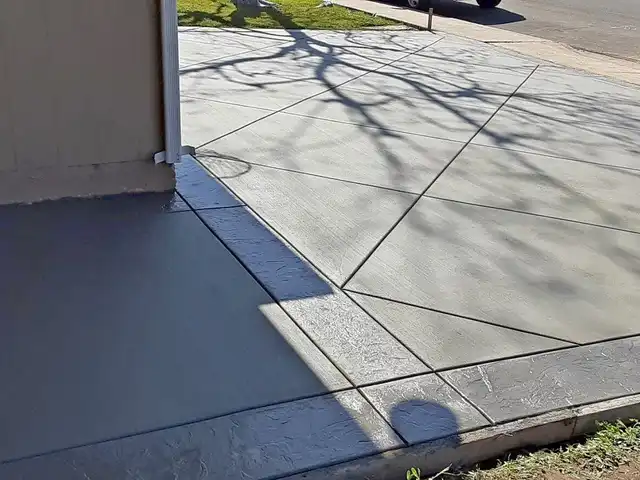
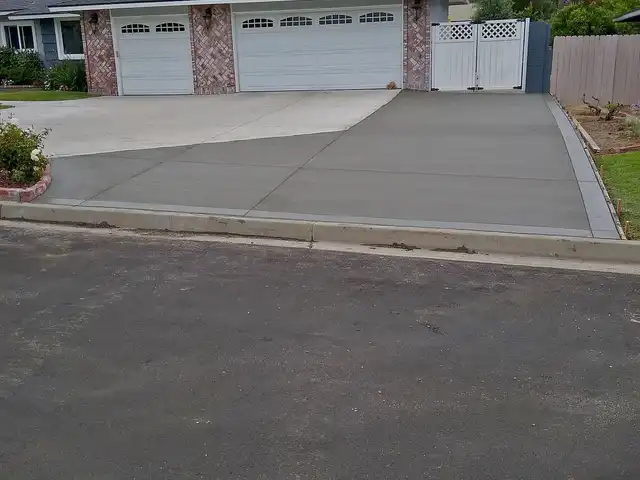
- Driveway and walkway replacement for 1990s and 2000s subdivisions across the county.
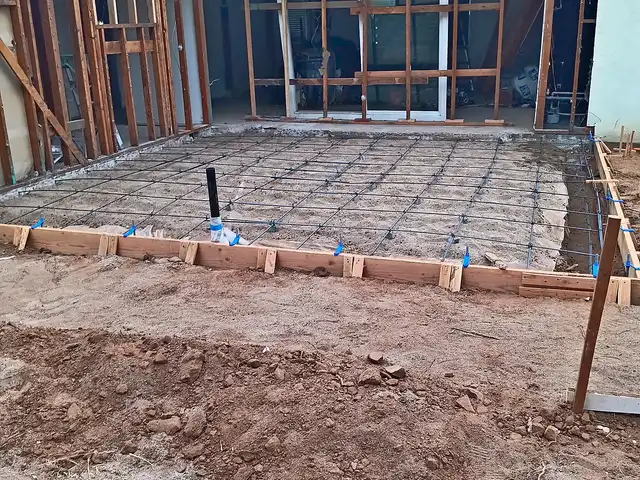
- Foundations and slabs for ADUs, garages and additions, poured to engineered plans on expansive soil.
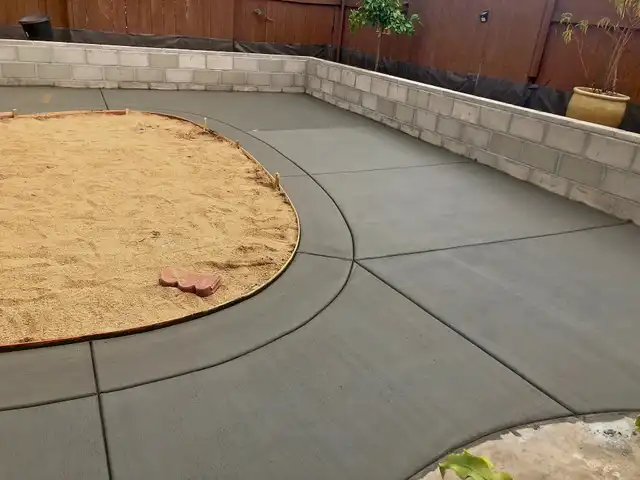
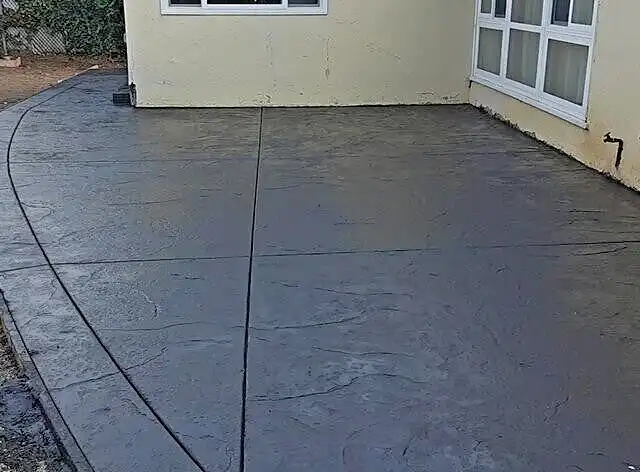
- Patios, sidewalks, curbs and approaches with proper joints and drainage.
- Concrete repair and replacement where sections have settled, lifted or spalled.
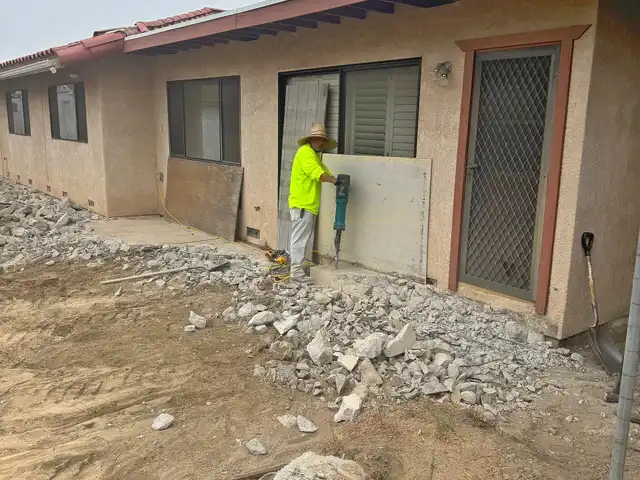
- Demolition and removal of old slabs, driveways and pool decks.
Do you need a permit for concrete work in Riverside County?
Two different permits can apply, depending on where the concrete goes.
- Building permit. Structures: foundations, slabs for buildings and retaining walls over 4 feet.
- Encroachment permit. Anything in the public road right-of-way: driveway approaches, curbs, gutters and sidewalks.
The California Residential Code lists sidewalks and driveways on private property as exempt from a building permit, though cities may amend that list.
In unincorporated Riverside County, building permits come from the Riverside County Building and Safety Department (opens in a new tab) under the Transportation and Land Management Agency (TLMA). Each of the county's 28 incorporated cities runs its own building department.
For right-of-way work, County Ordinance No. 499 requires an encroachment permit from the Riverside County Transportation Department. It covers driveway installations, street improvements and drainage facilities and can be issued to a contractor or an individual.
The County usually asks for financial security, and most permits are issued within 14 working days, so we build that into the schedule. Incorporated cities issue their own.
California's Business and Professions Code section 7048 requires a CSLB-licensed contractor on any concrete job of $1,000 or more in labor, materials and all other costs; AB 2622 raised that threshold in 2025.
Raaw Concrete Inc. holds CSLB license #1125756, C-8 Concrete; verify it at cslb.ca.gov.
A California contractor license is valid statewide, and ours is active.
What does concrete cost in Riverside County?
Published Southern California guides give a starting range. Inland jobs vary with access, distance and soil prep, so we quote from a site visit.
| Item | Southern California Range | Source And Year |
|---|---|---|
| Standard Broom-Finish Driveway | $10–$18 per sq ft (San Diego); $8–$20 per sq ft (Los Angeles) | Sal & Bros, Oct 2025; Level Works, 2026 |
| Stamped Or Decorative Driveway | $15–$28 per sq ft (San Diego) | Sal & Bros, Oct 2025 |
| Demolition of a 4-inch slab, hauled away | $2–$4 per sq ft; $4–$6 and up for 6-inch or rebar-heavy slabs | CNS Demo, June 2026 |
How far do we travel, and how do we schedule from Oceanside?
Our yard is at 2033 S Freeman St in Oceanside, California.
- Southwest Riverside County. Temecula, Murrieta, Wildomar, Menifee and Lake Elsinore are closest to us and where we do most of our Inland Empire work.
- Up I-15. Corona, Norco, Eastvale and Jurupa Valley are a straight run.
- Via I-215. Riverside, Moreno Valley, Perris, Hemet and San Jacinto.
In Riverside and Jurupa Valley we also take commercial flatwork, and in Corona, Norco and Eastvale subcontract work for builders.
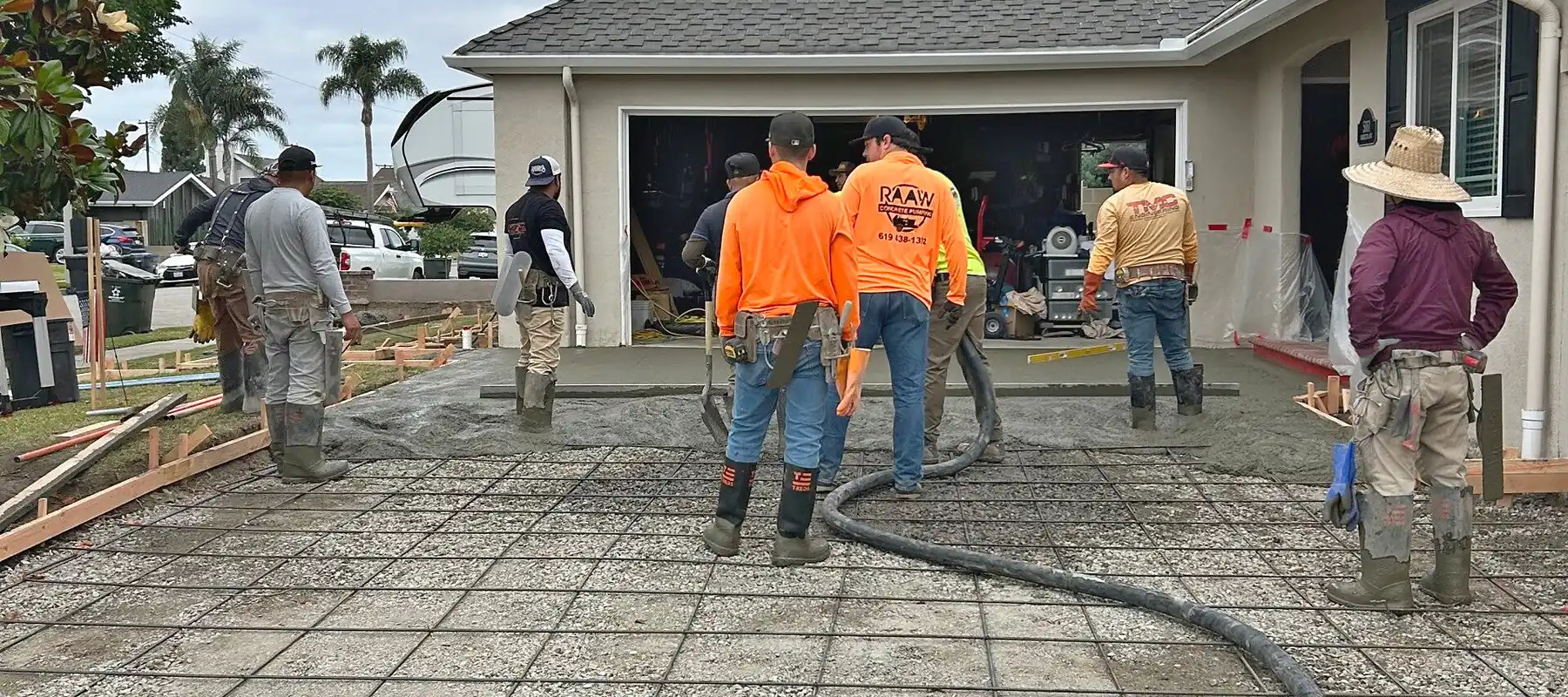
Our pumping background matters here. Long tract-home driveways, tight side yards and backyard pours behind finished landscaping go faster and cleaner with a pump.
Crews are on site from 5 a.m., Monday through Saturday. In summer, Riverside County pours go first on the calendar so concrete is down before mid-morning.
Most residential projects finish in about 3 working days, depending on the job, and always in a timely fashion.
- Walk On It
- 24–48 hours
- Drive On It
- 14 days
- Full Cure
- 28 days
The Coachella Valley (Palm Springs, Palm Desert, Indio, La Quinta and neighbors) and Blythe are scheduled by project scope. Larger foundations and multi-day subcontract work are worth the trip; call and we will tell you honestly.