What does concrete demolition and removal include?
Raaw Concrete Inc. is a licensed, bonded and insured C-8 concrete contractor based in Oceanside, California. Our crews break out and haul away concrete that no longer serves your property: driveways, patios, walkways, slabs, pool decks, steps, footings and low walls.
We serve homeowners, property managers and general contractors across San Diego, Orange, Riverside and Los Angeles counties. Most removals are day one of a new driveway or patio pour.
We also take stand-alone jobs where you want the concrete gone and the ground graded for turf, pavers or planting.
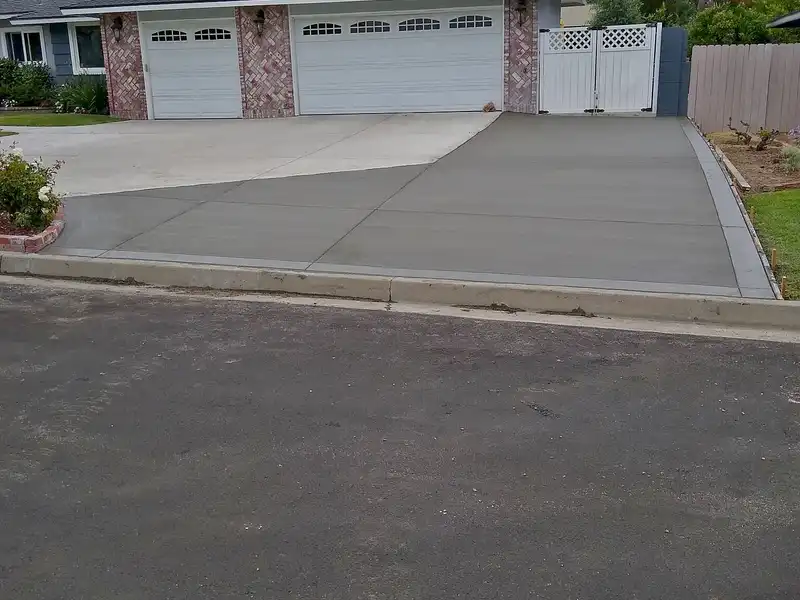
- Driveways and driveway approaches
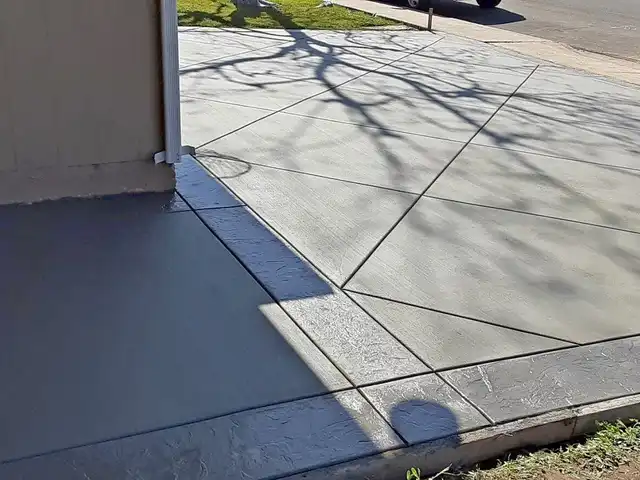
- Patios, walkways and pool decks
- Garage, shed and ADU slabs
- Footings, stem walls and low block walls
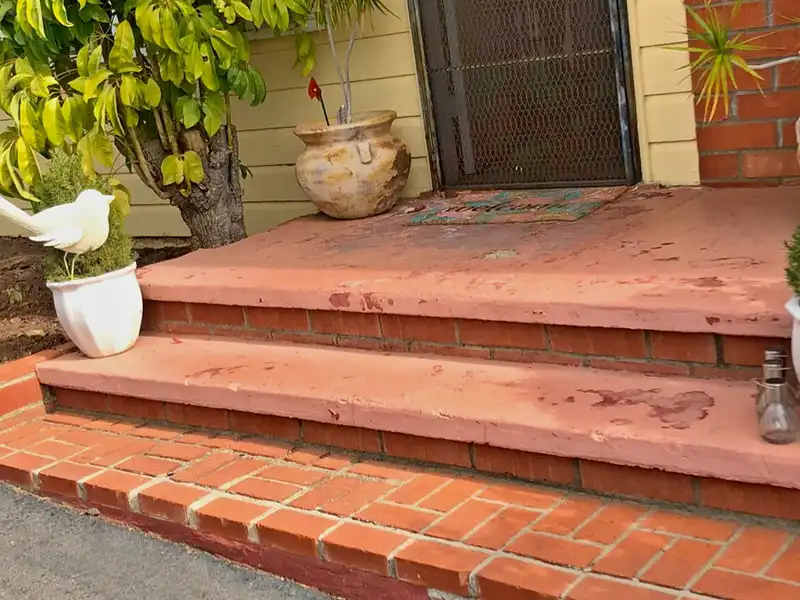
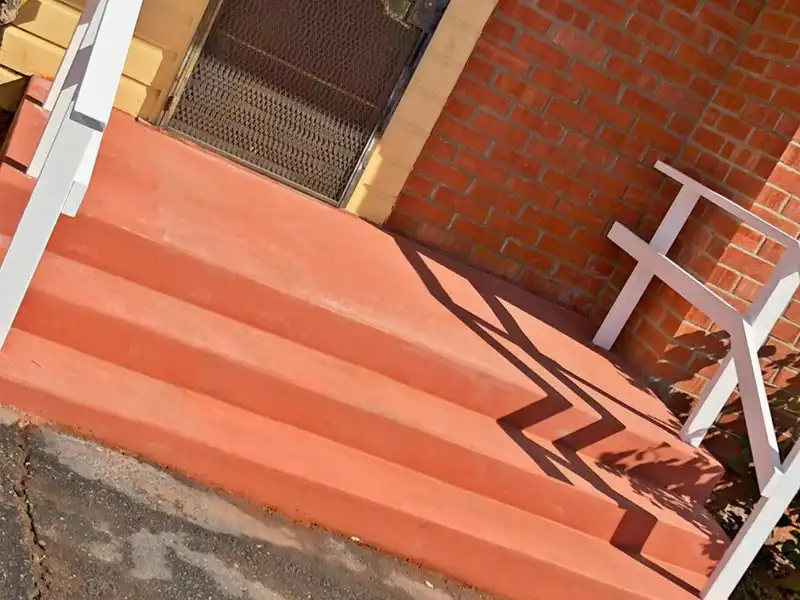
- Steps, stoops and landings
- Partial removals where only a damaged section comes out
Partial removal is common for settled driveway panels, cracked patio sections and slabs cut for plumbing or drainage work.
How do we break out old concrete?
The right method depends on slab thickness, reinforcement, access and what sits next to the concrete. We pick the tool that removes the slab fastest without damaging what stays.
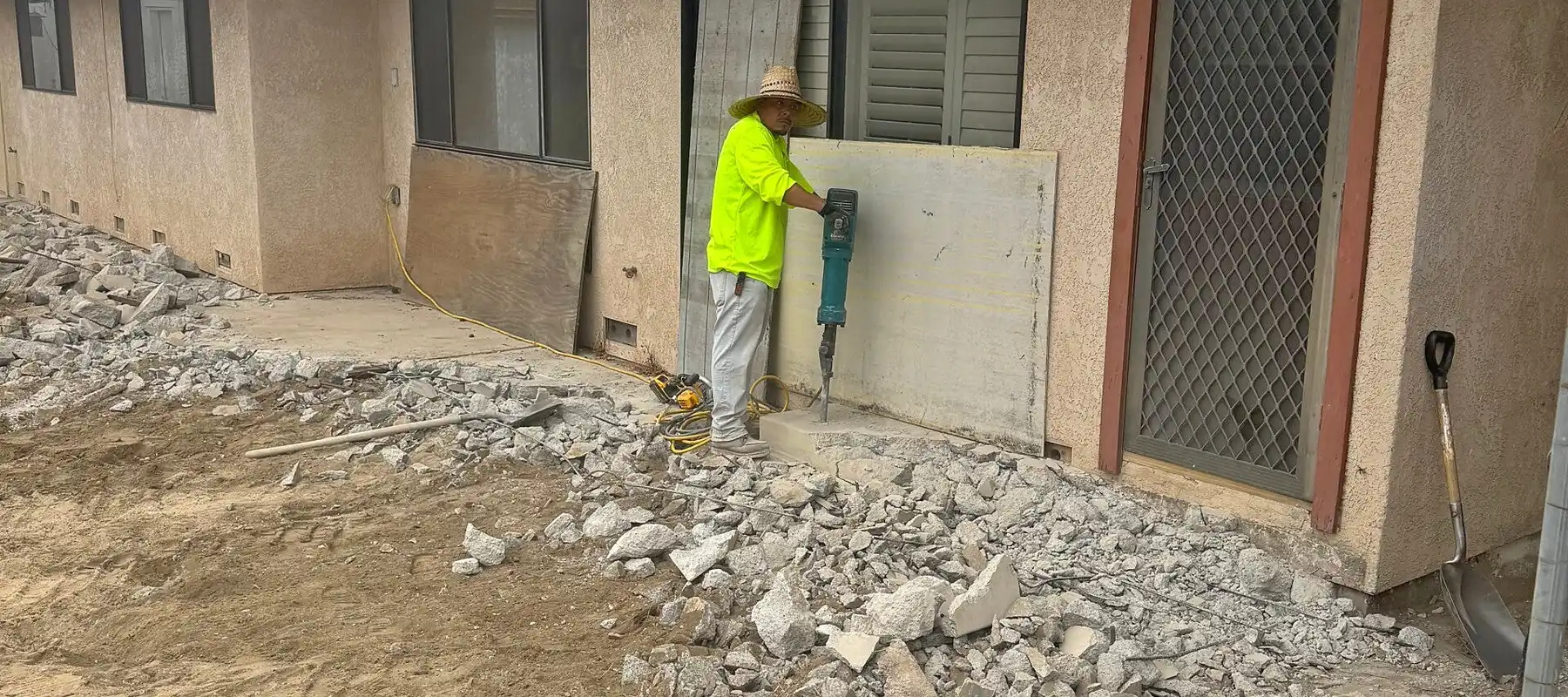
- Demolition hammer (jackhammer). Electric or pneumatic breakers handle patios against the house, side yards, steps and any spot a machine cannot reach safely.
- Skid steer with breaker or bucket. For driveways and larger slabs with street or gate access, a compact machine breaks, lifts and loads the concrete in a fraction of the time. We load straight into a dump trailer or truck.
- Saw-cutting. A wet concrete saw gives a straight, clean edge for partial removals. We cut along a joint or a marked line so the new pour meets the old slab at a true edge, not a ragged break.
- Rebar and mesh cutting. Reinforced slabs are cut apart with a saw or torch, and the steel is separated for recycling.
Saw-cutting also matters for what stays. Where new concrete meets a foundation or a retained slab, we plan an isolation joint with premolded filler. That lets the two pieces move independently instead of cracking each other.
What happens to the old concrete?
Broken concrete is loaded and hauled to a recycling facility, where it is crushed into aggregate base for roads and new slabs. Rebar and wire mesh are pulled out and recycled as scrap steel.
Hauling and disposal are built into our square-foot price. For reference, HomeAdvisor lists debris hauling at $150–$300 per ton nationally, and Angi puts separately quoted disposal at $0.50–2 per square foot.
How do we protect utilities, plants and neighboring structures?
Demolition is controlled destruction. Before the first hammer strike, our lead walks the site with you and marks everything that has to survive.
- Underground utilities. We locate irrigation, drain, gas, electrical and sewer lines that may run under or beside the slab, and have utilities marked before any digging below grade.
- Foundations and stem walls. Slabs poured against the house are saw-cut free first, so breaking does not transfer shock into the foundation. Stucco and siding are shielded at the base.
- Adjacent concrete. Where a slab meets a neighbor's driveway, a garage floor or a section you are keeping, we saw-cut a clean line and break away from it.
- Windows, doors and finishes. Plywood over sliding doors and windows, sheeting over nearby vehicles, and protection for landscaping that stays.
- Block walls and fences. We keep machines off shared walls and hand-break the last few feet along a fence line.
What about dust and noise?
Breaking concrete is loud and dusty for a few hours. We keep it as short and as contained as we can.
- Saw-cutting is done wet to keep silica dust down.
- We mist the slab during breaking and loading on dry, windy days, then sweep the street and sidewalk before we leave.
- We follow each city's construction-hour rules and confirm the schedule the day before so you can let neighbors know.
- Breaking is the loud part and is usually over by midday. Loading and hauling are quieter work.
Do you need a permit to remove concrete?
Usually not for private flatwork. The California Residential Code (R105.2) lists sidewalks and driveways as exempt from a building permit, so removing an at-grade patio or driveway on your own lot does not normally trigger one.
Cities can amend those exemptions, so we confirm with the building department when the scope is unusual.
The public right-of-way is different. A driveway approach, curb, gutter or public sidewalk between your property line and the street needs an encroachment or right-of-way permit first:
- City of San Diego: a Right-of-Way Permit covers curbs, gutters and sidewalks. Information Bulletin 165 offers over-the-counter Rapid Review for residential driveway remove-and-replace and up to 150 linear feet of curb, gutter and sidewalk.
- City of Oceanside: a permit is required for driveway improvements within the public right-of-way and for driveway relocations, per the city's Transportation Engineering FAQ.
- City of Los Angeles: LAMC 62.105 requires an A-Permit from the Bureau of Engineering for curbs, sidewalks, driveway approaches and gutters.
- Unincorporated LA, Orange and Riverside counties: road construction or encroachment permits apply. Riverside County notes most permits are issued within 14 working days, so approach work needs lead time.
We handle the permit paperwork for approach and sidewalk removals as part of the job. Our San Diego County page has more on local permit rules.
How long does concrete removal take?
Most residential removals are done in about a day. A typical two-car driveway or backyard patio is broken, loaded and hauled by mid-afternoon, with the subgrade rough-graded before we leave. Large foundation slabs, heavily reinforced commercial floors and tight-access sites can run two days.
When removal is phase one of a new pour, the whole project usually wraps in about three working days: demolition and grading, forming and reinforcement, then the pour. It depends on the job, and is always completed in a timely fashion.
New concrete then sets its own pace, on the standard residential schedule.
- Walk On It
- 24–48 hours
- Park A Car On It
- 14 days
How much does concrete removal cost in Southern California?
Concrete removal is priced by the square foot, then adjusted for thickness, reinforcement and access. National cost guides put removal at $2–$6 per square foot, and reinforced concrete at a 50–100% premium. Southern California pricing tracks that range closely.
| Concrete Type | Typical SoCal Range (2026) | Notes And Source |
|---|---|---|
| Standard 4-inch slab | $2–$4 per sq ft | Breaking, loading and haul-away included (CNS Demo, Jun 2026) |
| 6-inch or rebar-heavy slab | $4–$6+ per sq ft | CNS Demo, Jun 2026. Demo Diego (2026) puts 6-inch slabs at 20–40% more and heavy rebar at 30–50% more |
| Post-Tensioned Slab | $4–$6+ per sq ft | Cable release adds labor and care (CNS Demo, Jun 2026) |
| Public Sidewalk In The Right-Of-Way | $4–$6 per sq ft | Demo Diego, 2026. Add permit lead time |
| Small Jobs Under 100 sq ft | $500–$1,000 minimum | Mobilization and dump fees set the floor (Demo Diego, 2026) |
Worked examples from a 2026 Southern California cost guide:
- 600 sq ft Driveway
- $1,200–$2,400
- 400 sq ft Patio
- $800–$1,600
- 1,500 sq ft Foundation Slab
- $3,000–$6,000
Our estimates are itemized, so breaking, hauling and disposal show as separate lines.
Thick or reinforced concrete, no machine access and slabs poured against a house or a pool push a job toward the top of the range.
If only part of the slab is failing, ask about repair versus replacement. A partial removal can cost far less than a full tear-out.
Should you bundle demolition with the new pour?
Yes, in almost every case. One crew, one schedule and one estimate. There is no gap between tear-out and new concrete, and no second contractor blaming the first for a bad subgrade.
Bundling also lets us fix what the old slab was hiding: soft spots, tree roots, old fill and expansive clay. Southern California clay shrinks and swells with moisture.
County of San Diego standard PDS 065 covers single-story structures on moderately expansive soil. It calls for:
- Aggregate Underlayment
- 4 in
- Or Sand Underlayment
- 2 in
- Moisture Barrier
- 10 mil
- Slab Reinforcement, Each Way
- #4 bars at 18 in
Our site prep and excavation support handles that base work, and our foundation and slab crews pour to the engineered detail.
Ready to get rid of that old slab? Call (714) 321-0105 or request a free, itemized estimate. We will walk the site, check access and reinforcement, and give you a written price for removal alone or removal plus the new pour.